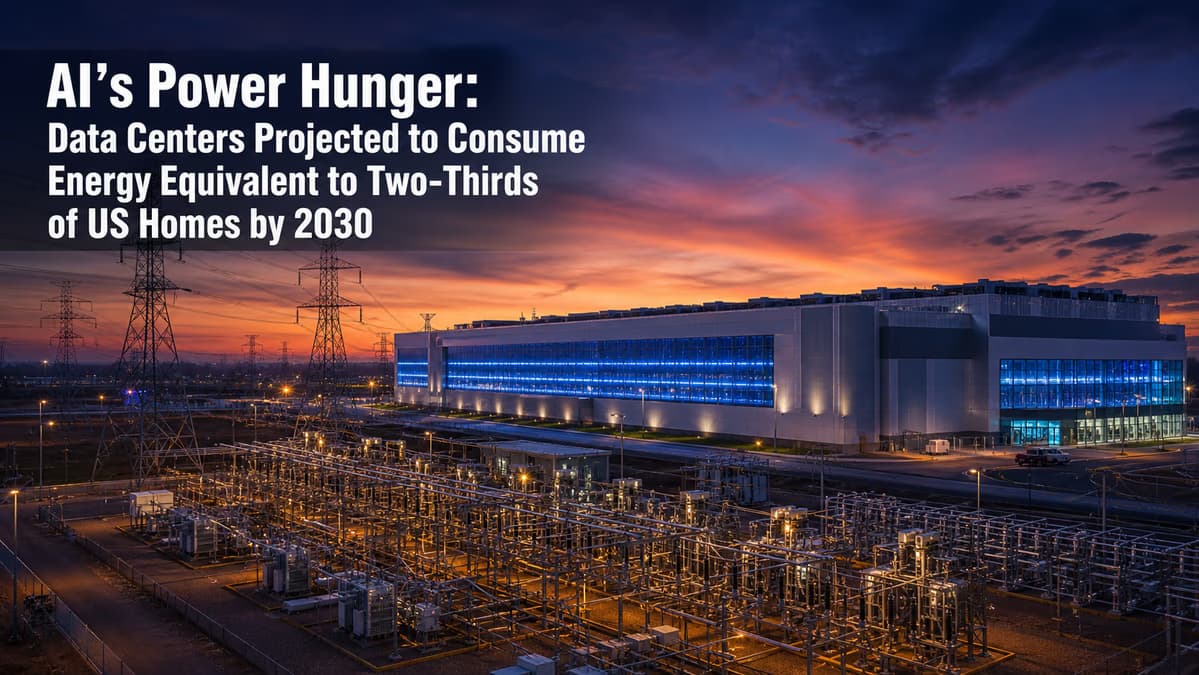
AI’s Power Hunger: Data Centers Projected to Consume Energy Equivalent to Two-Thirds of US Homes by 2030
AI data centers are projected to consume up to 12% of total US electricity by 2030, raising major grid reliability and environmental concerns.
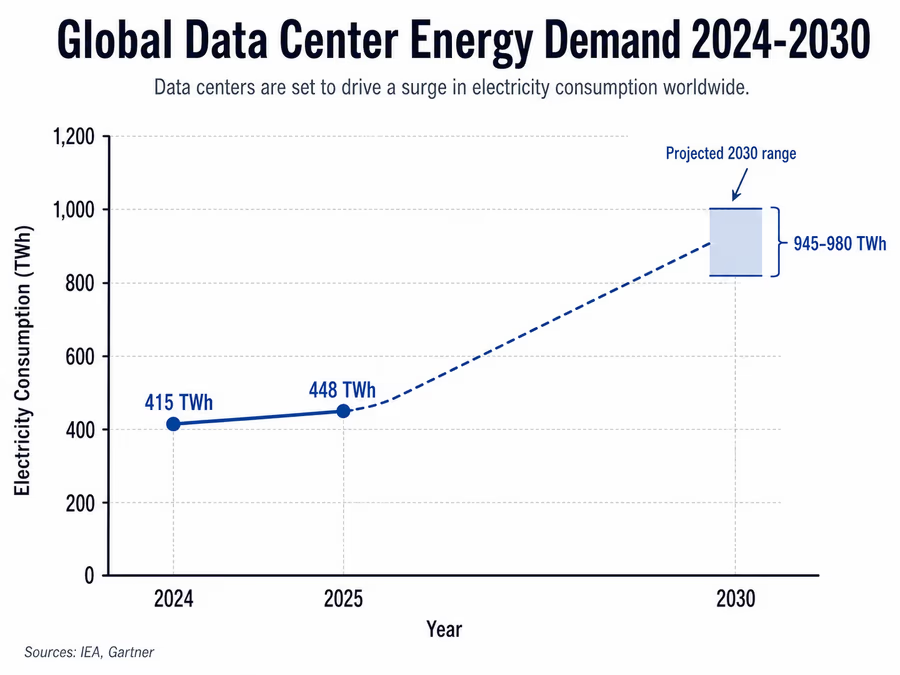
By the end of this decade, the massive server farms powering the artificial intelligence revolution are expected to consume a volume of electricity equivalent to two-thirds of all homes in the United States. New research indicates that global electricity consumption by data centers is projected to more than double, reaching approximately 945-980 terawatt-hours (TWh) by 2030. This surge is being driven almost exclusively by the rapid proliferation of generative AI and large language models.
In the United States, the world's largest data center market, the impact is particularly acute. Domestic data center electricity usage is estimated to climb from 176 TWh in 2023 to a staggering range of 325-580 TWh by as early as 2028. By 2030, these facilities are projected to account for between 9% and 12% of total U.S. electricity consumption, up from just 4.4% in 2023.
The Generative AI Energy Tax
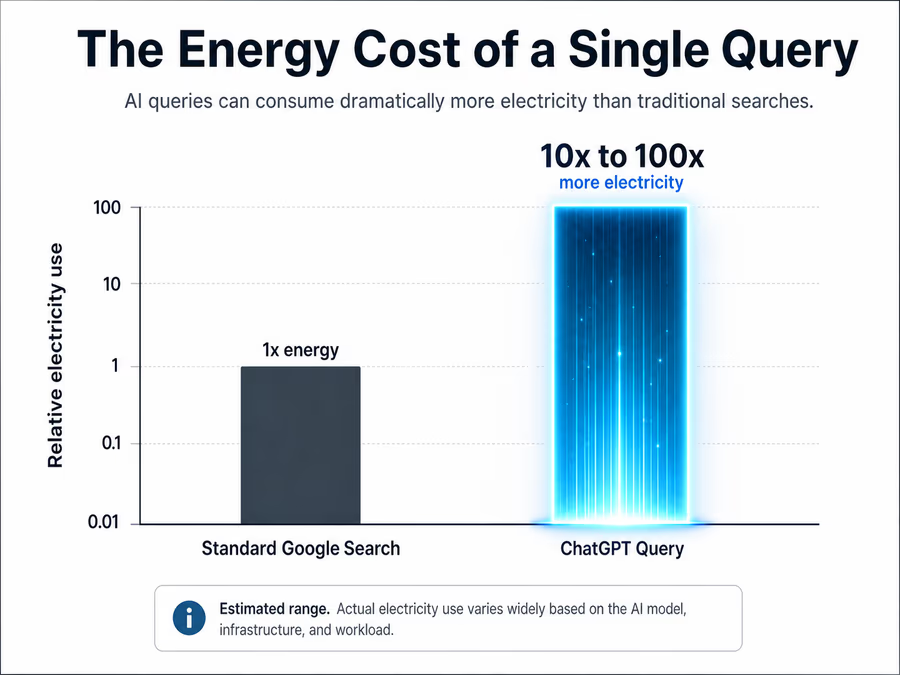
The fundamental shift in how we interact with the internet is at the heart of this energy spike. Unlike traditional search engines that simply retrieve and index information, generative AI models like ChatGPT perform billions of complex mathematical operations for every single prompt. Industry estimates suggest that a single ChatGPT query consumes between 10 and 100 times more electricity than a standard Google search.
As companies race to integrate these capabilities into every piece of software, the hardware requirements are shifting. Linglan Wang, Research Director at Gartner, notes that while conventional servers contribute to the baseline, the rapid rise of AI-optimized servers is the primary fuel for the fire. Wang states, "Their electricity usage is set to rise nearly fivefold, from 93 TWh in 2025 to 432 TWh in 2030." By that time, AI-optimized hardware is expected to represent 44% of total data center power consumption.
A Growing Environmental and Infrastructure Footprint
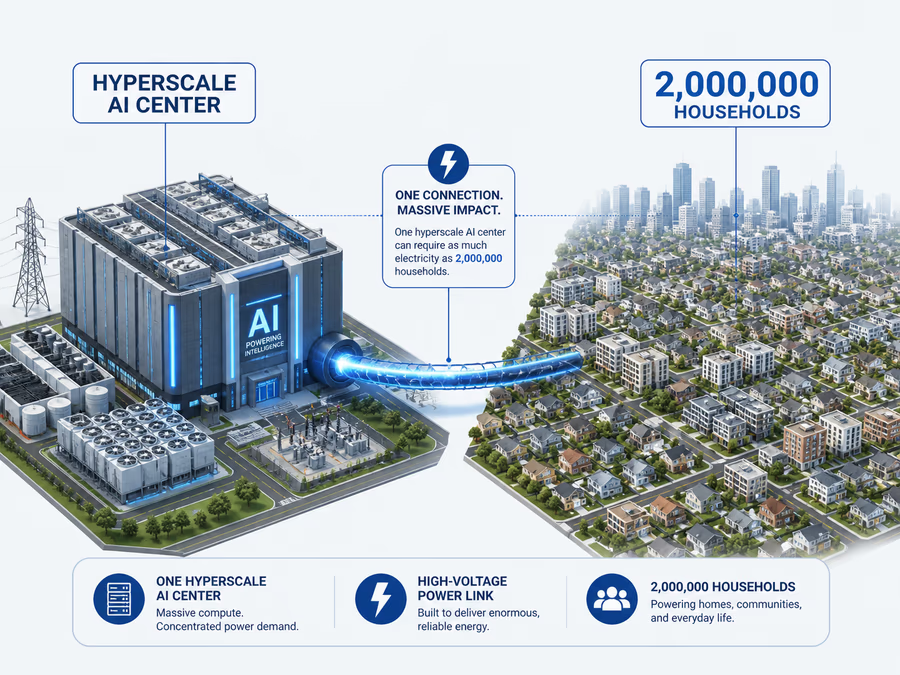
The physical scale of these operations is unprecedented. A typical AI-focused data center can consume as much electricity as 100,000 households. However, the next generation of "hyperscale" facilities currently under construction are projected to use up to 20 times that amount. This concentration of demand creates unique headaches for utility providers.
The International Energy Agency (IEA) recently reported that unlike electric vehicles, which distribute their load across the grid as they move, data centers tend to concentrate in specific geographic hubs. The IEA suggests this localized intensity makes integrating data centers into the existing power grid potentially more challenging than other green-energy transitions.
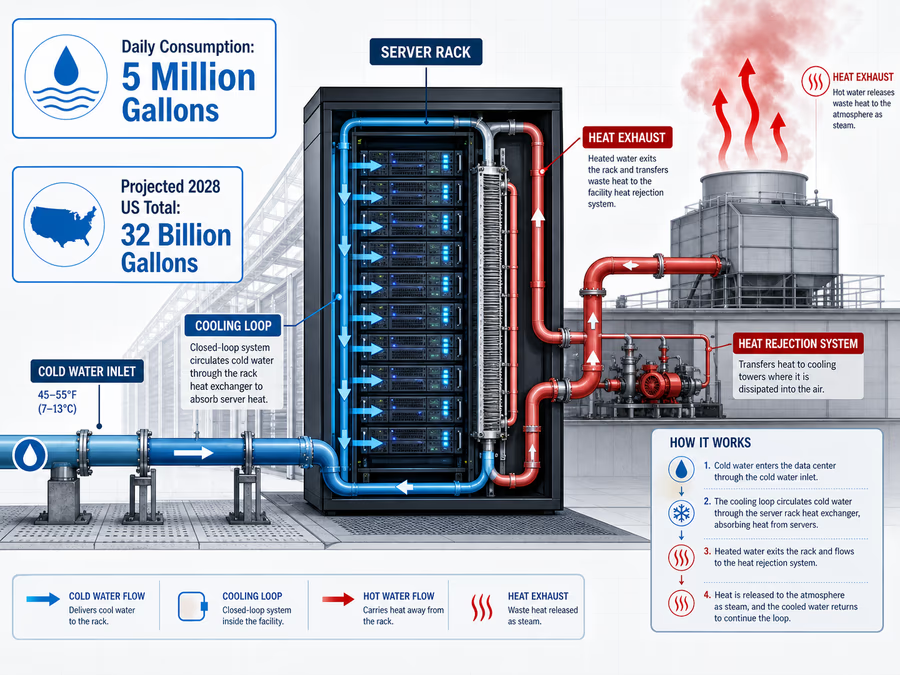
Beyond electricity, the environmental toll includes significant water consumption. Cooling these dense clusters of high-heat servers requires vast quantities of water, with large facilities using up to 5 million gallons daily. The Lawrence Berkeley National Laboratory predicts that by 2028, AI-related data centers in the U.S. could require up to 32 billion gallons of water annually. Ben Schaefer, Senior Manager of Strategic Communications at NRDC, warns that these facilities "are using up enormous amounts of energy and water and creating noise and air pollution."
Grid Reliability and Fossil Fuel Resurgence
The immediate pressure on the U.S. power grid, which is already operating near capacity in several regions, has raised alarms about long-term reliability and the risk of blackouts. This bottleneck is already influencing where companies choose to build; power availability has replaced real estate as the primary factor in site selection.
Ironically, the push for cutting-edge AI is also driving a resurgence in fossil fuel investment. To ensure the round-the-clock, "five-nines" reliability that AI workloads require, some developers are turning to natural gas. In 2026, massive natural gas projects in Texas and Pennsylvania received approval in part to satisfy the projected demand from nearby data center developments. This trend threatens to hinder progress toward national carbon-free energy targets.
The Path Toward Efficiency
The industry is not standing still in the face of these challenges. Tech giants are increasingly investing in custom silicon, such as Google’s Tensor Processing Units (TPUs), designed to deliver more AI processing power per watt. There is also a growing movement toward "on-device" generative AI, which shifts some of the computational load from the cloud to local smartphones and laptops, potentially de-centralizing the energy demand.
However, these efficiency gains may be offset by the sheer scale of ambition. OpenAI has estimated that training a single future "frontier" AI model could eventually require five gigawatts of power—roughly the output of five nuclear reactors. As the industry moves toward 2030, the primary constraint on the advancement of artificial intelligence may not be algorithmic complexity, but the physical limits of the electrical grid.