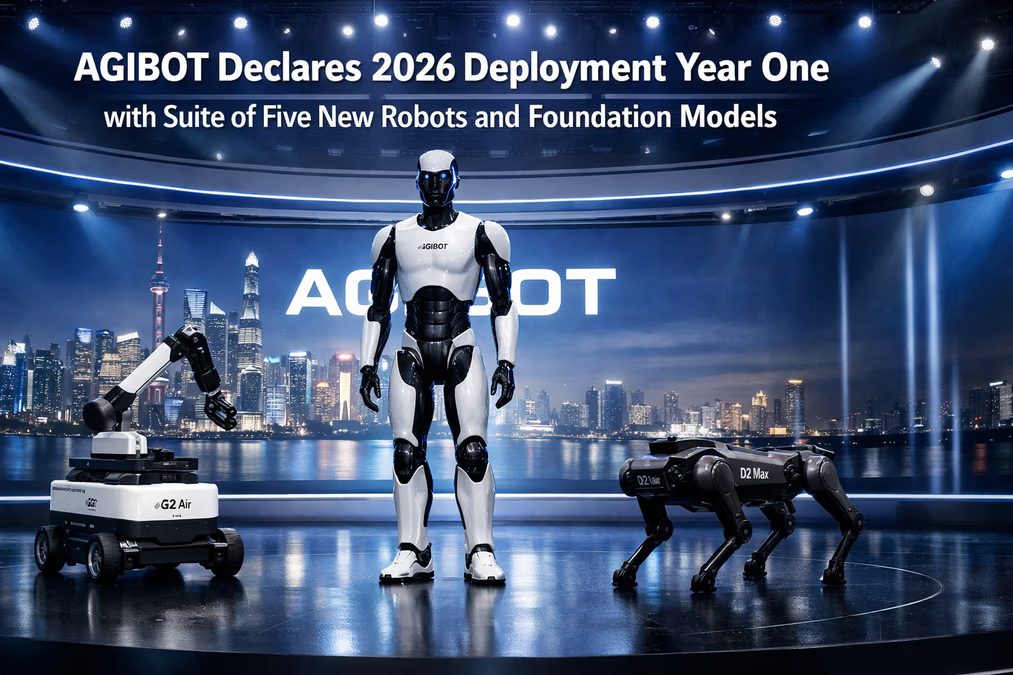
AGIBOT Declares 2026 ‘Deployment Year One’ with Suite of Five New Robots and Foundation Models
AGIBOT unveils five robotic platforms and the GO-2 foundation model to scale physical AI toward a trillion-dollar market by 2030.
AGIBOT designated 2026 as “Deployment Year One” for embodied AI during its Partner Conference in Shanghai on April 17, unveiling a massive portfolio of five robotic platforms and eight foundational AI models. The announcement marks a strategic pivot for the industry, moving away from laboratory-based research toward the large-scale commercial application of physical AI in industrial and service environments.
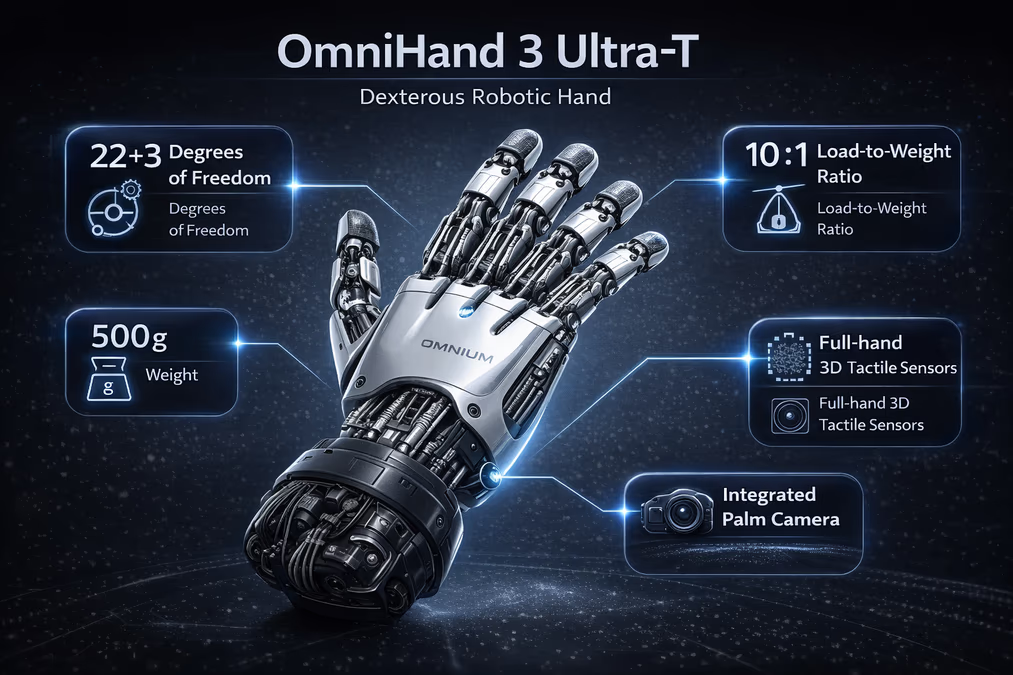
At the center of the product launch is the AGIBOT A3, a flagship humanoid robot standing 173 cm tall and weighing 55 kg. Constructed with a mix of magnesium, titanium, and TPU materials, the A3 is designed for agility and real-world durability. It was joined by four other specialized platforms: the G2 Air mobile manipulator, the D2 Max Level 3 autonomous quadruped for all-terrain navigation, and the OmniHand 3 series. The latter includes the Ultra-T, a tendon-driven dexterous hand with 22+3 Degrees of Freedom (DOF) that boasts a 10:1 load-to-weight ratio and full-hand 3D tactile sensing.
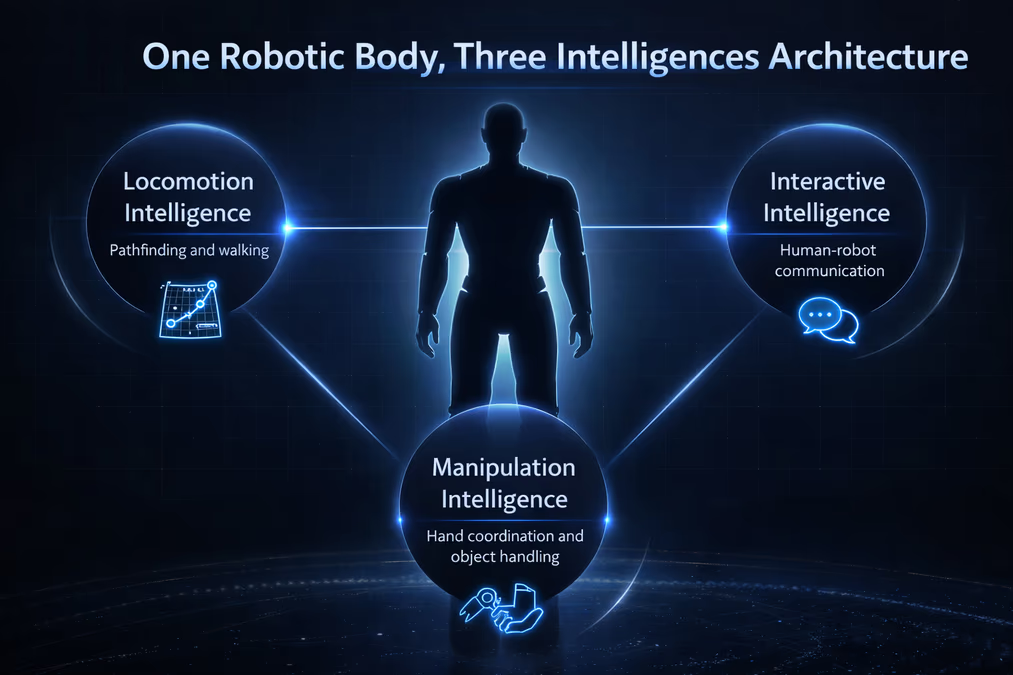
The “One Robotic Body, Three Intelligences” Architecture
AGIBOT’s new offerings are powered by a full-stack architecture dubbed “One Robotic Body, Three Intelligences.” This framework integrates Locomotion Intelligence, Manipulation Intelligence, and Interactive Intelligence into a single system. According to Edward Deng, Founder, Chairman, and CEO of AGIBOT, the company is focused on making embodied intelligence deployable under real-world constraints.
“The industry is moving from proving what robots can do, to proving what value they can consistently deliver at scale,” Deng said. He emphasized that the company’s goal is to turn robotic machines into “reliable units of productivity” that can be scaled across various industrial sectors.
Bridging the Semantic-Actuation Gap with GO-2
The technical backbone of these robots is the GO-2 (ViLLA) Embodied Foundation Model. Building on its predecessor, GO-1, the new model introduces “Action Chain-of-Thought” (Action CoT) to bridge the “Semantic-Actuation Gap”—the historical difficulty in translating high-level logical reasoning into precise, low-level motor commands.
GO-2 integrates vision, language, and action into a unified architecture, allowing robots to perform complex tasks that require both reasoning and physical execution. The company reported that GO-2 has already achieved state-of-the-art results on several major robotic benchmarks. Peng Zhihui, Co-founder and CTO of AGIBOT, noted that embodied intelligence is no longer just a concept but is becoming a new form of “productive infrastructure.”
Solving the Training Data Crisis
A persistent bottleneck in the development of physical AI has been the scarcity of high-quality interaction data. While large language models train on the vast resources of the internet, embodied AI requires real-world tactile and motion data. Current global estimates place available high-quality interaction data at only 500,000 hours.
To address this, AGIBOT introduced the MEgo body-free data collection system, designed to capture synchronized vision, motion, and tactile data. Furthermore, the company announced its new subsidiary, Maniformer, which is dedicated to scalable physical AI data services. Yao Maoqing, Chairman of Maniformer and Senior VP of AGIBOT, explained that the goal is to reach a staggering 10 billion hours of data production capacity by 2030.
Economic Outlook and Ecosystem Investment
AGIBOT’s commercial momentum is already visible; the company celebrated the rollout of its 10,000th robot in March 2026. To support its vision of a trillion-scale market for embodied intelligence by 2030, AGIBOT plans to invest over RMB 2 billion into its partner ecosystem over the next five years.
As the company moves robots from “laboratory curiosity to production-line reality,” the focus shifts to reliability and measurable value. With the combination of advanced hardware like the OmniHand 3 and the GO-2 foundation model, AGIBOT is positioning itself as a foundational architect of the emerging physical AI economy. The company's vision suggests that by the end of this decade, intelligent robots will not just be novelties but fundamental layers of global productivity.